


Friday afternoon hits, several RVs arrive within the same hour, and suddenly there’s a line stretching from the campground office into the entrance road. Staff members are checking reservations, handing out maps, explaining rules, answering questions, and directing guests to their sites; all while more campers continue to pull in.
For busy campgrounds and RV parks, this is a familiar problem.
The campground check-in process is one of the first experiences guests have after arriving at your property. When it moves smoothly, guests can get settled and start enjoying their stay. When it takes too long, frustration can build before they’ve even reached their campsite.
The good news is that long check-in lines aren’t always an unavoidable part of a busy arrival day. Campgrounds can reduce congestion by preparing guests before arrival, simplifying what happens at the front desk, improving traffic flow, and using digital tools for information that doesn’t need to be explained in person.
Here’s how to avoid long lines at campground check-in without making the arrival experience feel impersonal.
Why Campground Check-In Lines Get So Long
Long lines usually aren’t caused by one major problem. More often, several small delays happen at the same time. Understanding where those delays come from is the first step toward improving your campground check-in process.
Too Many Guests Arrive at the Same Time
Campground arrivals naturally tend to cluster around certain hours. Friday afternoons, holiday weekends, and the beginning of major events can bring a large number of guests through the entrance within a relatively short period.
Even an efficient front desk can become overwhelmed when multiple RVs arrive one after another.
The problem becomes more noticeable when there isn’t enough space for rigs to wait safely. A line of motorhomes, travel trailers, and fifth wheels can quickly create congestion near the office or entrance.
Looking at your reservation data can help identify your busiest arrival windows. Once you know when those surges normally happen, you can schedule staff and adjust arrival procedures accordingly.
Staff Have to Explain the Same Information Repeatedly
Think about how many times your front desk answers the same questions on a busy Friday:
Where is my site? What’s the Wi-Fi password? When is quiet time? Where are the restrooms? What time does the pool close? Where do I take my trash?
These are important questions, but answering them individually for every arriving guest takes time.
Providing essential information before arrival or making it easily accessible once guests enter the property can reduce the amount of information staff need to cover during check-in. It also gives employees more time to help guests who actually need personal assistance.
Paperwork Creates Unnecessary Delays
Registration forms, vehicle information, signatures, waivers, and payment details can turn a quick arrival into several minutes at the front desk.
Multiply that by ten or twenty families arriving around the same time, and the line can grow quickly.
Review your current process and ask which steps truly need to happen after the guest arrives. Information that can be collected online beforehand doesn’t necessarily need to be handled again at the office.
Guests Arrive Without Knowing What to Do
Sometimes the delay starts before a guest even walks into the office.
A first-time visitor may not know where to park a large RV, whether they should stay in their vehicle, where registration takes place, or what information they need to have ready.
Clear campground arrival tips sent before the trip can prevent much of this confusion. A short pre-arrival message explaining where to go, what to prepare, and what to expect can make the first few minutes on the property considerably easier for both guests and staff.
Start Improving Check-In Before Guests Arrive
One of the easiest ways to create a faster arrival is to move part of the process out of the campground office.
Instead of waiting until guests pull through the gate to explain everything, give them the information they need ahead of time.
Send a Useful Pre-Arrival Message
A pre-arrival email or text should answer the questions guests are most likely to have on arrival day. Include the check-in window, entrance instructions, where to park, what they need for registration, and what to do if they arrive after the office closes.
Keep the message practical. Guests who are packing an RV or driving several hours don’t need a long welcome email filled with promotional information. They need the details that will help them arrive without confusion.
A good pre-arrival message can also remind guests to complete any remaining forms or payments before leaving home.
Set Clear Expectations About Arrival Times
If check-in begins at a specific time, communicate it clearly during booking, in confirmation emails, and again shortly before arrival.
Guests who arrive significantly early can create additional traffic while staff is still preparing sites for incoming reservations. Clear communication won’t eliminate every early arrival, but it can reduce misunderstandings and help spread arrivals more predictably.
For particularly busy weekends, campgrounds can also provide guests with information about expected peak arrival periods so travelers can plan accordingly when their schedules allow.
Simplify What Happens During Campground Check-In
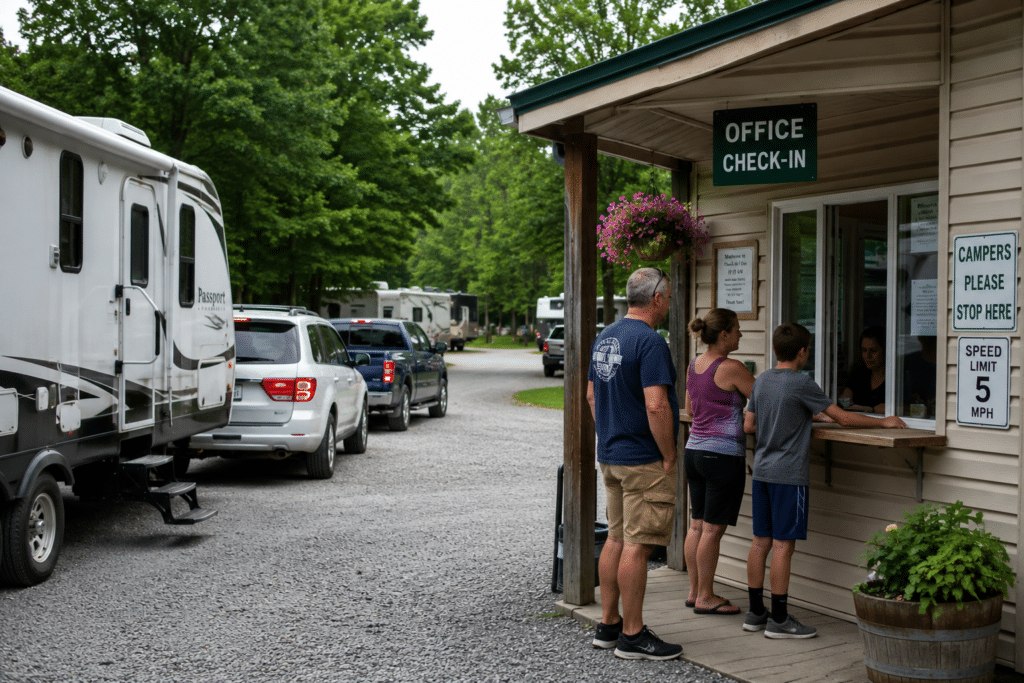
Once guests arrive, the goal should be to get them from the entrance to their campsite without unnecessary stops or repeated steps. That doesn’t mean rushing the interaction. It means removing tasks that don’t need to happen at the front desk.
A simpler campground check-in process is easier for guests to understand and gives staff more time to handle questions, special requests, and unexpected issues.
Review Every Step in Your Current Process
Start by walking through check-in from a guest’s perspective. How many steps does someone have to complete between entering the property and reaching their site?
Look for steps that regularly slow things down. Guests may be asked to provide information they already entered when booking, wait while staff print documents, sign several forms, or listen to a long explanation of campground rules.
Some of those steps may be necessary. Others may simply exist because “that’s how we’ve always done it.”
Moving forms, payments, rules, and basic property information to the pre-arrival stage can shorten the in-person interaction without taking away the personal welcome.
Create an Express Campground Check-In Option
Not every guest needs the same level of assistance.
A returning visitor who has already paid, completed required forms, and knows the property may only need their site assignment and arrival information. Putting that guest through the same process as a first-time visitor creates an unnecessary delay for everyone.
An express campground check-in option can give prepared guests a faster arrival while keeping traditional front-desk assistance available for those who need it.
For example, guests who complete everything before arrival could receive instructions that allow them to proceed with minimal interaction at the office. Staff can then spend more time helping first-time visitors, handling reservation changes, or answering more complicated questions.
Separate Check-In From General Guest Questions
A busy arrival period becomes even harder to manage when the same employee is checking in new guests, answering phone calls, helping current campers, selling firewood, and giving directions to nearby attractions.
When staffing allows, separate these responsibilities during your busiest arrival windows. One employee might focus primarily on incoming reservations while another handles existing guest needs.
Even a temporary change in responsibilities for two or three peak hours can help keep the line moving.
Make Arrival Directions Easy to Follow
Efficient check-in isn’t limited to what happens inside the office. Traffic flow around the entrance can have just as much impact on the arrival experience.
Large RVs require more room to maneuver than passenger vehicles, so unclear directions can quickly create backups.
Use Clear Signs at the Entrance
Guests should know what to do as soon as they enter the property.
Clearly marked signs can direct arriving campers toward registration parking, the office, an express check-in lane, or an after-hours arrival area. Signs should be visible early enough for RV drivers to make the correct turn without stopping suddenly or attempting a difficult turnaround.
Keep the wording simple. Drivers pulling a large rig need directions they can understand at a glance.
Think About the Entire RV Park Check-In Route
Walk or drive the route that arriving guests take through your property. Better yet, imagine doing it for the first time while towing a 35-foot travel trailer.
Are turns clearly marked? Is there enough room to stop near the office? Can multiple rigs wait without blocking the campground entrance? Is it obvious which direction guests should travel after registration?
These details are especially important for RV park check-in, where a poorly positioned vehicle can affect several arrivals behind it.
If congestion regularly occurs in the same location, changing signage, parking instructions, or traffic patterns may solve part of the problem without requiring major changes to your registration process.
Use Digital Tools to Reduce Front-Desk Bottlenecks
Technology works best when it removes repetitive tasks rather than adding another complicated system for guests to learn.
A practical digital campground check-in approach can move routine information away from the front desk while still keeping staff available when personal assistance is needed.
Give Guests Information They Can Access on Their Own
Campground maps, Wi-Fi details, quiet hours, amenity information, local recommendations, rules, and activity schedules don’t necessarily need to be explained verbally at check-in.
Making this information available digitally allows guests to reference it whenever they need it instead of trying to remember everything they were told after a long day of travel.
BlueSpot Connect’s digital check-in solution using iConnect Tags, for example, can give guests convenient access to campground information from a rearview mirror tag. Rather than downloading an app, guests can scan the tag to access helpful information throughout their stay.
This doesn’t eliminate staff interaction. It simply means the front desk doesn’t have to cover every campground detail during the busiest few minutes of the guest’s arrival.
Make Digital Tools Part of a Simple Process
Adding technology won’t solve a slow check-in process if guests don’t understand how to use it.
Any digital option should be easy to explain and require very few steps. Staff should also remain available for guests who prefer traditional assistance or have questions that can’t be answered digitally.
The goal isn’t to make every arrival completely automated. It’s to streamline guest check-in by handling routine information more efficiently while preserving the personal service that guests expect from a campground.
Prepare Your Staff for Peak Arrival Times
Even with a streamlined process and digital tools, staff preparation still matters. Busy weekends can become stressful quickly when several guests arrive at once, especially when employees are handling check-ins, phone calls, maintenance requests, and questions from current campers at the same time.
A little planning before the arrival rush can help your team stay organized and keep guests moving.
Review the Arrival List Before Check-In Begins
Before the busiest part of the day, staff should know who is expected to arrive and whether any reservations require extra attention.
Look for first-time guests, large rigs, accessibility requests, group reservations, late arrivals, or guests who still need to complete paperwork or payment. Identifying these situations ahead of time allows your team to prepare instead of solving every issue while a line forms behind the guest.
You can also separate guests who have completed everything in advance from those who still need assistance. This makes an express process much easier to manage.
Assign Clear Responsibilities
When everyone is responsible for everything, check-in can become disorganized.
During peak arrival periods, decide who will handle incoming guests, phone calls, current camper questions, and other front-office responsibilities. At larger properties, one employee might greet arriving RVs while another completes registrations inside.
Smaller campgrounds may not have enough staff to dedicate employees to individual roles. In that case, preparing arrival packets, maps, site assignments, and other materials beforehand can still reduce the amount of work required for each reservation.
Give Staff Consistent Answers to Common Questions
Guests frequently ask the same questions about Wi-Fi, quiet hours, pets, trash, amenities, visitors, and campground activities.
Make sure employees know where guests can find these answers and provide consistent information. If one employee gives different instructions from another, guests may return to the office for clarification and create additional work for the team.
Providing information digitally can also support better guest experiences by giving campers a resource they can return to throughout their stay instead of relying on everything they heard during check-in.
Plan for Early, Late, and After-Hours Arrivals
Not every guest will arrive during the scheduled check-in window. Traffic delays, mechanical problems, weather, and long travel days can all affect arrival times.
Having a clear procedure for these situations keeps exceptions from disrupting your normal campground check in operations.
Have a Process for Early Arrivals
Early arrivals can create challenges when the previous guest has only recently departed, or the site hasn’t been inspected and prepared.
Your policy should explain whether early check-in is available and what guests should do if they arrive before their site is ready. If you have a designated waiting area, make sure guests know where it is and whether their RV can safely fit there.
Most importantly, communicate the policy before arrival. A guest who already knows what to expect is less likely to pull into a busy registration area several hours early expecting immediate access.
Make Late Arrivals Straightforward
Guests arriving after the office closes shouldn’t have to guess where to go.
Create a simple late-arrival process that provides the guest’s site number, directions to the site, essential rules, and instructions for anything that must be completed the following morning.
The fewer decisions guests have to make after arriving in the dark, the smoother the experience will be.
Clear directions are particularly important for RV travelers. Navigating an unfamiliar campground with a large rig at night can be difficult, so site numbers, road names, and directional signs should be easy to see.
Use Guest Communication to Prevent Check-In Problems
Many delays that appear to be check-in problems are actually communication problems.
A guest who doesn’t know where to park, hasn’t completed required paperwork, or expects an amenity you don’t offer will naturally require more attention when they arrive. Better communication earlier in the guest journey can prevent many of these situations.
Don’t Overload Guests With Information
Sending more information isn’t necessarily better.
A five-page arrival email may contain every detail a camper could possibly need, but that doesn’t mean they’ll read it. Prioritize the information guests need before reaching your property and make everything else easy to access later.
For example, the pre-arrival message might cover check-in time, directions, parking instructions, required forms, and after-hours procedures. Detailed rules, activity schedules, local recommendations, and amenity information can remain available through your website or digital guest resources.
Make Important Information Available Throughout the Stay
Guests will forget things. That’s normal, especially after a long drive and a busy arrival.
Instead of expecting campers to remember every instruction given at the office, provide a reliable place where they can find information again.
A guest who can quickly look up the Wi-Fi password, campground map, quiet hours, or amenity schedule doesn’t need to return to the office every time a question comes up. This helps reduce front-desk traffic not only during check-in but throughout the entire stay.
Track What’s Actually Slowing Down Check-In
Before investing in major changes, pay attention to where delays are really happening.
For a few busy weekends, have staff note the most common reasons a check-in takes longer than expected. You may discover that most delays come from incomplete payments, guests asking for directions, paperwork, difficulty locating reservations, or explaining campground rules.
Once you know the cause, you can fix the specific problem instead of redesigning the entire process.
You can also monitor how long an average arrival takes and whether changes such as pre-arrival communication, express check-in, or digital information reduce that time. The goal isn’t simply to make check-in faster. It’s to create an arrival process that’s easier for guests and more manageable for your staff.
Common Check-In Mistakes That Create Longer Lines
Sometimes the biggest delays aren’t caused by the number of guests arriving. They’re caused by small problems in the process that repeat with every reservation.
Fixing these issues can make check-in faster without requiring more employees or major changes to your campground.
Asking Guests for Information You Already Have
If guests provided their contact information, vehicle details, or other basic information during the reservation process, avoid asking them to provide it all again when they arrive.
Review your booking and registration systems to determine which information can carry over automatically. Every step you eliminate can save a little time, which becomes significant when dozens of guests arrive during the same afternoon.
Explaining Every Campground Rule at the Front Desk
Rules are important, but check-in isn’t always the best time to explain every policy in detail.
After several hours on the road, guests are usually focused on finding their site, getting their RV positioned, and settling in. A long verbal explanation can slow the line while also making it difficult for guests to remember everything they were told.
Provide essential safety or arrival instructions in person, then make the complete campground rules easily available through your website, guest materials, or digital resources.
Making the Front Desk the Only Source of Information
When every question requires a trip to the campground office, the front desk becomes a bottleneck.
Campground maps, amenity hours, Wi-Fi information, event schedules, local recommendations, and common policies should be available somewhere guests can access without staff assistance.
Self-service information doesn’t replace customer service. It gives guests another convenient way to find simple answers while allowing employees to focus on situations where personal help is actually needed.
Using the Same Process for Every Guest
A first-time camper arriving with a large fifth wheel may need more guidance than a returning guest who has stayed at your property several times.
Your process should be flexible enough to accommodate both.
Guests who have completed registration requirements in advance can move through an express campground check-in, while campers who need assistance can still receive a more traditional welcome. This prevents simple arrivals from becoming unnecessarily long without sacrificing service for guests who need extra help.
Campground Arrival Tips to Share With Guests
Improving check-in isn’t solely an operational responsibility. You can also help guests prepare for a smoother arrival.
A few simple instructions sent before their trip can prevent many common delays.
Have Reservation Information Ready
Ask guests to keep their reservation confirmation or booking information easily accessible when they arrive.
This is particularly helpful during busy periods when staff are processing several reservations in quick succession.
Complete Required Steps Before Traveling
If your campground allows guests to sign agreements, submit vehicle information, or complete payments online, encourage them to handle those tasks before departure.
Don’t wait until the arrival email to mention these requirements. Introduce them during booking and send a reminder shortly before the stay.
Follow the Recommended Check-In Time
Clearly communicating arrival windows helps your operations team prepare sites and reduces congestion from guests arriving much earlier than expected.
You can explain that following the recommended check-in time helps ensure their site is ready when they reach the property. Framing the policy around a smoother arrival experience is often more useful than simply stating a rule.
Know Where to Go Upon Arrival
Give guests clear instructions about what happens when they reach the entrance.
Should they park and enter the office? Remain in their vehicle? Use a designated RV lane? Proceed directly to their site after completing digital registration?
Don’t assume the answer will be obvious when they arrive. Clear instructions are especially valuable for first-time guests who have never seen the layout of your property.
What a Faster Campground Check-In Should Look Like
A faster check-in doesn’t need to feel automated or impersonal. In fact, removing administrative tasks can give staff more time for meaningful guest interactions.
Instead of spending several minutes collecting information and explaining policies, an employee can greet the guest, confirm the important details, answer immediate questions, and help them get to their site.
The ideal process might look something like this: the guest receives arrival instructions beforehand, completes necessary forms before traveling, knows exactly where to go upon arrival, and has campground information available digitally throughout the stay. When they reach the property, staff only need to handle the parts of check-in that genuinely require personal assistance.
That’s what makes digital campground check-in useful. Technology handles repetitive information while your team remains available to provide hospitality.
Frequently Asked Questions
Campgrounds can avoid long lines at campground check-in by collecting information before arrival, providing clear arrival instructions, simplifying registration, preparing staff for peak periods, and giving guests digital access to routine campground information.
An express campground check-in is a faster arrival option for guests who have already completed required forms, payments, or registration steps. It reduces the amount of time they need to spend at the office before heading to their site.
Digital campground check-in can move forms, instructions, maps, rules, and other routine information outside the front-desk interaction. This reduces repetitive work for staff while giving guests convenient access to information before and during their stay.
Useful pre-arrival information includes check-in times, driving and entrance directions, registration requirements, parking instructions, after-hours procedures, and anything guests should complete before reaching the property.
An RV park check in process can be improved by reviewing unnecessary registration steps, preparing for peak arrival periods, creating clear traffic directions for large rigs, offering express options, and making common guest information available without requiring a visit to the front desk.
Make Every Arrival Easier for Guests and Staff
Learning how to avoid long lines at campground check-in isn’t about removing the personal welcome that makes camping hospitality special. It’s about taking unnecessary work out of the arrival process so your staff can spend more time helping guests.
Clear pre-arrival communication, better traffic flow, prepared employees, simpler registration, and accessible digital information can all contribute to a smoother experience.
BlueSpot Connect’s iConnect Tags provide campgrounds with a practical way to give guests digital access to important information throughout their stay. Instead of relying on lengthy explanations and printed materials at arrival, guests can access the information they need from a convenient rearview mirror tag.
Contact BlueSpot Connect today to learn how a digital check-in solution can help streamline arrivals, reduce front-desk bottlenecks, and create an easier welcome for your guests.