


Picture a family sitting on the couch, planning their next camping trip. One parent is scrolling on a phone; the other has a tablet open with maps and reviews. They tap on a promising campground… and hit a site that’s slow, hard to read, and impossible to navigate without pinching and zooming.
They back out, try the next result, and book with your competitor.
For many campgrounds, that’s the moment revenue is lost not at the front desk, not on the phone, but right there on a small screen.
Across the outdoor hospitality world, the pattern is the same: owners invest in amenities, activities, and beautiful sites, but the digital front door is still stuck in 2012. A responsive website isn’t just a “nice update.” In 2025, its core infrastructure. It’s how you attract modern campers, show off what makes your property special, and turn online browsers into booked guests.
This guide walks through why responsive design matters, how it impacts SEO and bookings, and what you can do to upgrade without blowing your budget.
What Is Responsive Design and Why Does It Matter for Campgrounds?
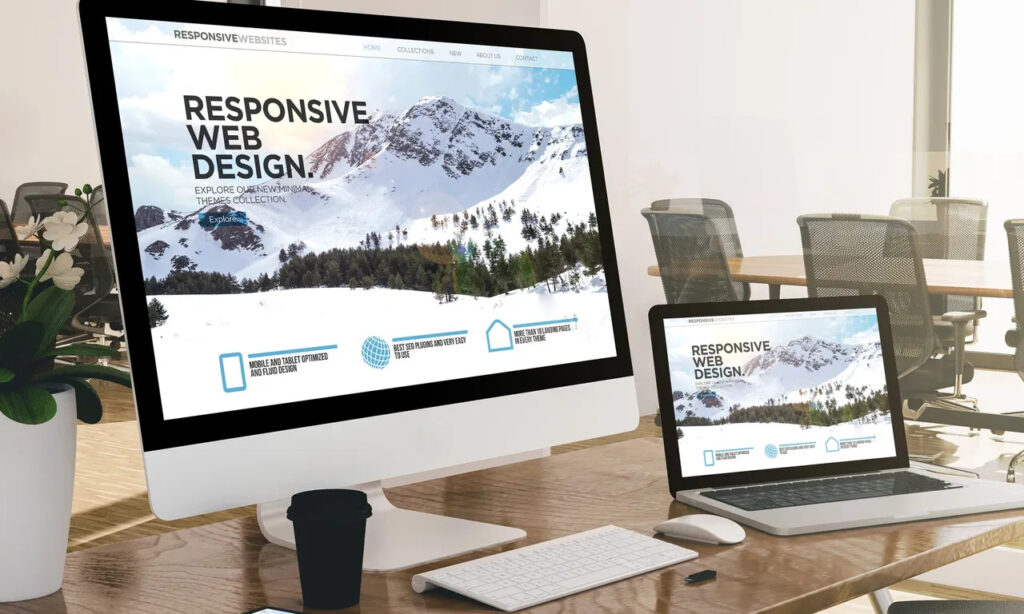
Responsive design means your website automatically adapts to the screen it’s on phone, tablet, laptop, or desktop without you running separate “mobile” and “desktop” versions.
Instead of juggling two sites, one flexible design adjusts:
- Grid layout and columns
- Image size and cropping
- Navigation and menus
- Booking tools, forms, and buttons
Under the hood, this comes from flexible grids, scalable images, CSS media queries, and a mobile-first layout strategy. But the outcome is simple: your campground website just works on any device.
For campgrounds, that translates into:
- Guests who can read your site map on a phone
- RVers who can see pad sizes and hookups without sideways scrolling
- Tent campers who can skim your rules and photos quickly
- Fewer “I couldn’t find the information” calls clogging the office line
When your site is responsive, you’re not forcing people to fight with your pages. You’re removing friction so they stay longer, explore more, and feel confident enough to book.
How Do Campers Actually Use Your Website Today?
Campers are planners but they’re not planning the way they used to.
Industry data across travel and lodging shows that over half of trip-related traffic now happens on mobile devices, and camping is no exception. Guests rely on their phones.
- Search “campgrounds near me” while on the road
- Tap Google Maps results to check location and reviews
- Flip through photo galleries to see sites, cabins, and amenities
- Check availability and complete a booking on the spot
If your site isn’t built for that behaviour, it’s not just a small annoyance. It’s a direct revenue leak.
On a non-responsive site, campers run into the same issues again:
- Buttons too tiny to tap
- Menus that break or overlap
- Forms that won’t fit on the screen
- Phone numbers and CTAs that are hard to find
They don’t usually send an email complaining. They simply close the tab and book with the next campground whose site feels effortless on a phone.
How Does Responsive Design Improve the Guest Experience?
Think about the information someone needs before they trust you with a weekend or week of their time:
- What does the property look like?
- Are the sites big enough for my rig?
- Are there things for my kids to do?
- How far is it from the highway, town, or park entrance?
A responsive site puts those answers front and center on every device.
On mobile, that might mean:
- A simple menu with clear options: Stay | Amenities | Map | Book
- Image galleries that swipe easily with a thumb
- Text sized for reading without zooming
- Tap-to-call and tap-to-navigate buttons
On desktop, that same site expands gracefully into wider layouts that show more photos, more content, and deeper detail without you rewriting every page.
The result is a consistent experience: the camper who researches on a laptop at night and books from their phone at lunch sees the same brand, the same information, and the same level of professionalism.
How Does a Responsive Site Boost Your SEO and Visibility?
Google now uses the mobile version of your site as the primary version for indexing and ranking, a system known as mobile-first indexing.
That means:
- If your site is weak or broken on mobile, your search rankings suffer.
- If your layout causes high bounce rates, Google sees that as a quality signal.
- If your content is split across “m.yourcampground.com” and “www.”, your backlinks and authority are diluted.
A responsive campground website helps SEO by:
- Keeping one URL per page, so every backlink strengthens the same resource
- Reducing bounce rates because the site is readable and usable on phones
- Improving engagement metrics like time on page and pages per session
- Making it easier to meet performance and Core Web Vitals standards
Campgrounds that move from a non-responsive legacy site to a modern, mobile-friendly build consistently report increases in organic traffic and more bookings coming directly from Google without paying extra for ads.
How Can Modern Design Build Trust with First-Time Guests?
Before a guest sees your entrance sign, they see your website.
A dated, cramped, hard-to-use site sends a quiet but powerful message:
“We don’t invest in the guest experience online. Maybe we don’t invest offline either.”
A responsive, clean design lets you:
- Showcase your best amenities with sharp photo galleries
- Highlight site maps, hookups, cabins, and glamping options in an organized way
- Keep branding consistent across every device
- Make rules, policies, and FAQs easy to find
When first-time visitors can quickly understand your property and see that you’ve invested in a professional digital presence, it becomes much easier for them to trust that the real-world experience will match the promise.
In a crowded market, especially near popular national parks, beaches, or lakes, trust often becomes the tiebreaker between you and the campground down the road.
How Do You Turn Mobile Visitors into Booked Guests?
Getting someone on your site is only half the job. The rest is guiding them, gently but clearly, toward a booking.
On mobile, that means:
- Forms built for thumbs, not mice – short, simple, with autofill where possible
- Large, visible “Book Now” buttons that stay accessible in a sticky header or footer
- Clear availability and pricing information, so guests aren’t guessing
- Minimal friction no unnecessary fields, no confusing steps
Tools like analytics and heatmaps can show where visitors drop off, which buttons they miss, and which forms cause abandonment. With that information, you can:
- Move your primary CTA higher on the page
- Simplify your booking flow
- Test different button labels or colours
- Fix hidden usability issues that don’t show up on desktop alone
When you treat the mobile booking path as a first-class experience not an afterthought you make it easy for campers to move from “just looking” to “see you Friday.”
How Does Responsive Design Simplify Maintenance and Costs?
Running separate “desktop” and “mobile” sites used to be common. In 2025, it’s expensive, confusing, and unnecessary.
With one responsive site, you:
- Maintain one codebase and one content set
- Cut down on duplicate updates and errors
- Reduce the risk of inconsistent information between versions
- Make security updates and performance improvements easier to roll out
This is especially important for smaller campground teams where marketing, reservations, and operations often blur together. When your team only must think about one site, they can spend more time on great photos, helpful content, and guest communication not wrestling with two half-maintained websites.
How Can You Align with Accessibility and Government-Backed Best Practices?
Responsive design isn’t just about looking good it supports accessibility and inclusion, too.
U.S. agencies like the General Services Administration and the Department of Homeland Security publish guidance on building mobile-friendly, accessible digital experiences. Their recommendations emphasize:
- Clear, readable typography
- Logical content hierarchy
- Sufficient colour contrast
- Keyboard and screen-reader friendly navigation
- Mobile-friendly layouts for all users, including those with disabilities
Two particularly useful resources to explore are:
- The GSA web style and design guidance, which outlines usability and content clarity standards used across federal websites.
- DHS and broader federal efforts under the 21st Century Integrated Digital Experience Act, which push agencies to make sites more mobile-responsive and user-friendly by default.
You don’t have to become a government web designer, but aligning with these principles helps ensure your campground website is usable for guests with visual, motor, or cognitive differences and that’s both the right thing to do and good business.
How Does a Responsive Site Future-Proof Your Campground Online?
The way guests discover and evaluate campgrounds keeps changing. Voice search, “near me” queries, social media recommendations, and map-based browsing continue to grow.
Responsive, modern sites are better positioned for:
- Voice queries like “family campground near me with full hookups”
- Mobile map views where users tap through to your site
- Embedded virtual tours, map overlays, and 3D site maps
- On-site chat and messaging tools for quick questions
As more of this behaviour moves to mobile, non-responsive sites fall further behind. Upgrading now means you’re not just catching up you’re creating a foundation that can handle new tools, new guest expectations, and new booking channels as they evolve.
What’s the Bottom Line for Campground Owners in 2025?
A responsive website isn’t optional anymore. It’s a core part of how your campground:
- Shows up in search
- Builds trust with new guests
- Handles mobile bookings
- Reduces support calls and confusion
- Competes with larger parks and chains
With a modern, mobile-friendly design, you gain:
- Higher visibility in search
- More completed bookings on phones and tablets
- A smoother, more confident guest experience
- A stronger, more consistent digital brand
- Lower long-term maintenance and tech costs
If your current site still forces campers to pinch, zoom, and guess, it’s likely costing you reservations you never see.
Bluespot Connect specializes in helping campgrounds replace outdated, hard-to-use sites with fast, responsive, conversion-focused designs built for today’s guests. When your website finally matches the quality of your property, you’re not just “online” you’re truly open for business, on every device your next guest uses. Ready to upgrade your digital front door? BluespotConnect can help you build a fast, responsive, guest-friendly website that turns online visitors into booked stays.