


Printed materials like maps, schedules, and policy sheets have long been part of the campground experience. However, keeping printed information up to date can be challenging. Activity schedules change, local business hours shift, and campground policies may be updated throughout the season. Even small changes often require new materials to be printed and distributed.
Because of this, many parks are beginning to use campground QR codes to provide digital guest information that can be updated instantly. With a quick scan, guests can access maps, activity schedules, WiFi instructions, and local recommendations directly from their phones.
As more campgrounds adopt mobile-friendly technology, QR codes are becoming a simple but powerful way to improve campground guest communication while making important information easier for travelers to access.
Common Guest Communication Challenges at Campgrounds
Many campground teams work hard to keep guests informed, but traditional communication methods can create several challenges.
Information Changes Frequently
Campgrounds regularly update event schedules, park policies, and local recommendations. Printed materials make it difficult to keep everything current without constant reprinting.
Guests Misplace Printed Materials
Maps and activity sheets are helpful during check-in, but they are easy for guests to lose once they arrive at their campsite.
Travelers Expect Mobile Access
Today’s travelers often look for information on their phones first. When campground information is only available in print, guests may still need to visit the front office to ask questions.
Front Desk Teams Answer the Same Questions
Campground staff frequently answer repeated questions about WiFi, amenities, and nearby attractions, which can take time away from other important responsibilities.
What Campground QR Codes Can Provide for Guests
One of the biggest advantages of QR codes for RV parks is that they can organize several types of guest information in one convenient place. Instead of handing guests multiple sheets of paper, campgrounds can connect QR codes to a digital information page that includes everything visitors may need during their stay.
Here are some examples of what campground QR codes can provide:
- Campground maps showing amenities, restrooms, and walking paths
- Activity schedules for events and community gatherings
- WiFi instructions and connection details
- Local attractions, restaurants, and outdoor activities nearby
- Emergency contact information and campground policies
Because the information is stored digitally, campground staff can update it anytime without replacing printed signs or materials. Guests simply scan the same code and see the newest information available.
This flexibility is one of the main reasons QR codes are becoming a valuable campground guest communication tool.
How QR Codes Improve the Guest Experience
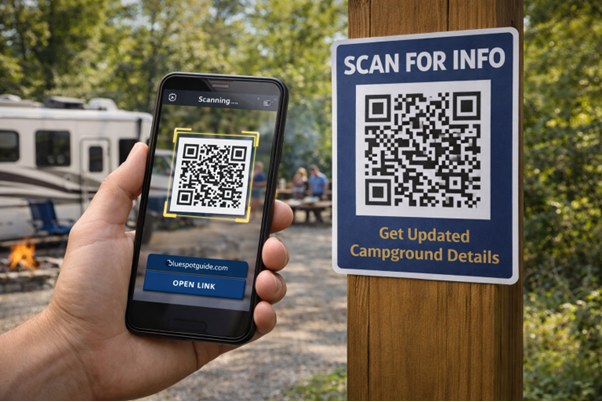
Convenience plays a major role in guest satisfaction. When travelers arrive at a campground, they want to settle in and begin enjoying their trip quickly. QR codes make this easier by allowing guests to access important information instantly.
Instead of walking back to the office to ask questions, guests can scan a code and find what they need on their phone. This can be especially helpful for travelers arriving late in the evening when the front desk may be closed.
Mobile-friendly information also allows campgrounds to provide richer content. Digital maps, updated event calendars, and nearby travel recommendations can all be organized in one easy-to-access location.
Over time, this kind of accessibility can significantly improve the overall campground experience for visitors.
Why QR Codes Reduce Front Desk Questions
Campground teams often spend a large portion of their day answering the same questions from guests. While helping visitors is an important part of hospitality, repetitive questions can slow down operations during busy travel seasons.
Campground QR codes help solve this problem by placing information exactly where guests need it.
Quick Access to Common Information
Guests frequently ask about WiFi passwords, check-out times, quiet hours, or directions to nearby amenities. A QR code placed at the check-in desk or near campsites can provide instant access to this information.
Self-Service for Travelers
Many travelers prefer to find answers on their own rather than wait in line at the front office. With QR codes, guests can quickly scan and view instructions or campground details whenever they need them.
More Time for Guest Service
When staff spend less time answering routine questions, they can focus more on providing helpful recommendations and improving the overall guest experience.
How Digital Guest Hubs Make QR Codes Even More Powerful
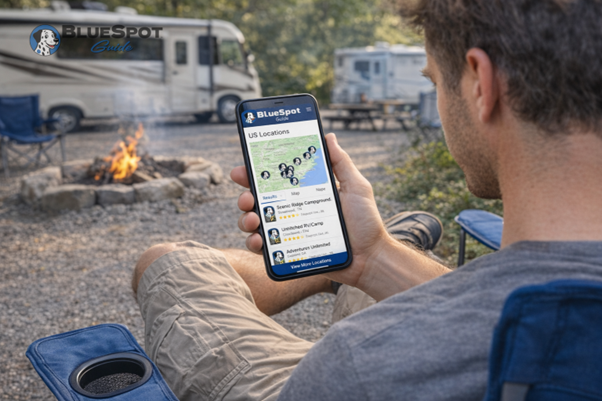
Some campgrounds take QR codes a step further by connecting them to digital guest hubs. These hubs act as a central location where guests can find maps, announcements, activity schedules, and local travel recommendations.
Centralized Information
Instead of scattering information across multiple flyers or bulletin boards, a digital guest hub keeps everything organized in one mobile-friendly page.
Real-Time Updates
Campground managers can update event schedules, park policies, or local recommendations instantly without printing new materials.
Better Travel Planning
Guests can explore nearby attractions, restaurants, and outdoor activities directly from the digital hub.
Tools like digital guest hubs and smart tags from BlueSpot Connect allow campgrounds to organize guest information, maps, and local recommendations in one place while keeping everything easy to update.
Why Mobile-Friendly Campground Information Matters
Today’s RV travelers rely heavily on mobile devices while traveling. They use their phones as guide to find directions, check weather updates, search for restaurants, and explore nearby attractions.
Because of this, providing mobile-friendly digital guest information for campgrounds simply matches the way people already travel.
When important details are available on a phone, guests feel more confident navigating the campground and the surrounding area. They can quickly check activity schedules, locate amenities, or find something interesting to do nearby.
Instead of worrying about where they left their paper map, guests can easily reopen the information whenever they need it.
A Simple Upgrade That Makes a Big Difference
QR codes may be simple technology, but they can have a meaningful impact on how campgrounds communicate with guests. With a quick scan, travelers gain instant access to important information while campground staff save time managing printed materials.
More importantly, campground QR codes help bridge the gap between traditional hospitality and modern traveler expectations.
As more parks adopt digital communication tools, QR codes will likely become a standard feature across the campground and RV park industry.
Improve Campground Guest Communication with BlueSpot Connect
Campgrounds looking to modernize their guest communication can benefit from a platform that combines QR codes, digital guest hubs, and smart campground tags.
With BlueSpot Connect, campground owners can organize maps, activity schedules, WiFi information, and local recommendations in one easy-to-update digital hub. Guests simply scan a QR code to access everything they need during their stay.
Explore how BlueSpot Connect helps campgrounds simplify guest communication and improve the overall guest experience or contact the team to get started.