


Key Highlights
- Digital check-in significantly improves the guest experience by reducing long wait times at the front desk, especially during busy holiday seasons.
- The technology boosts operational efficiency, allowing hotel staff to focus on providing personalized service instead of manual data entry.
- Hotel guests gain more control and convenience, with options for pre-arrival check-in, room selection, and mobile key access.
- Digital check-in enhances security by protecting personal information and offering secure, contactless payment methods.
- Hotels can use guest data collected during the process to tailor stays, offer relevant upgrades, and increase guest satisfaction.
Introduction
The holiday season brings full campgrounds, packed hotels, busy front desks, and guests arriving all at once. Digital check-in has quickly become one of the best ways to reduce lobby chaos, shorten wait times, and help travelers start their stay on a positive note. But digital check-in alone isn’t enough.
For the process to truly work, guests must be able to quickly access clear arrival instructions, accurate maps, updated rules, and mobile-friendly guest information the moment they pull in. That’s where modern digital tools, responsive websites, clean printed guides, simple digital maps, and instant-scan QR/NFC tags become essential.
When paired with strong visual design and fast mobile access, digital check-in transforms the arrival experience into something smoother, clearer, and far more guest-friendly.
Why Digital Check-In Matters During the Holiday Rush
Travelers are used to doing everything on their phones, booking stays, boarding flights, navigating with GPS, and checking restaurant reviews. When they arrive at a hotel or campground after a long trip, they expect the same level of convenience: fast arrival, minimal waiting, and clear guidance about where they’re going.
Digital check-in supports this by allowing guests to:
- Complete necessary steps before arrival
- Upload ID or payment details securely
- Review rules and property policies
- Receive arrival instructions
- Access a digital key or confirmation
- Skip the front-desk line entirely
But even the best check-in tool falls short if guests still arrive confused about where to park, how to locate their site or room, or where amenities are located. Without clear communication tools to back up, your front desk still absorbs all that traffic.
Why Digital Check-In Needs Mobile-Friendly Information to Work Well
Outdated printouts, cluttered websites, old PDFs, or missing information will undermine the check-in experience. During peak holiday season, guests get frustrated quickly when they can’t find:
- The campground or hotel map
- Parking areas
- Check-in/out instructions
- Quiet hours
- Wi-Fi details
- Amenity hours
- Local activities
- Rules and safety guidelines
When essential information is missing or hard to scan, the arrival experience falls apart and staff end up answering the same questions repeatedly.
Modern properties now pair digital check-in with:
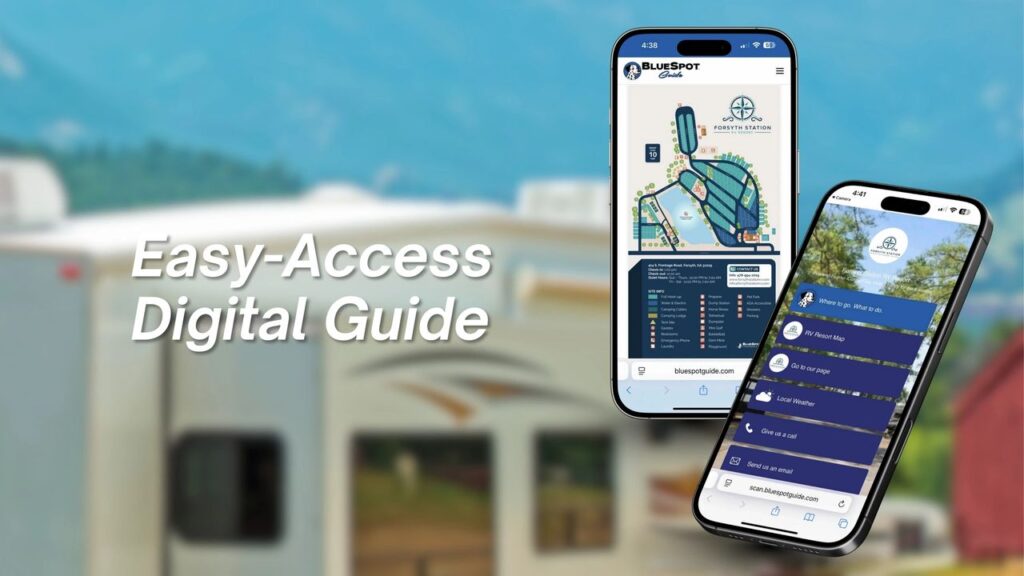
- Responsive websites that function seamlessly across devices
- Scan-based digital guides using QR or NFC tags
- Clean, updated printed maps that replace confusing handouts
- Branded printed materials that match the digital experience
- Simple digital area guides guests can access instantly
- Consistent branding and communication from reservation to checkout
These tools don’t replace digital check-in
They make digital check-in actually work as intended.
What a Digital Check-In and Modern Guest Tools Reduce Holiday Chaos
1. Shorter Lines and Less Lobby Congestion
Digital check-in cuts down on front-desk backups. But the real magic happens when guests can scan for immediate access to:
- Maps
- Amenity details
- Rules
- Parking instructions
- Local recommendations
With these resources readily available, guests bypass the lobby entirely and head straight to their site or room.
2. Updated Maps Prevent Guest Confusion
Properties that rely on old, blurry, or outdated maps see the most arrival of confusion. Modernizing maps both printed and digital helps guests navigate confidently the moment they arrive, especially during full holiday bookings.
Updated map flyers solve problems such as:
- Wrong site numbers
- Missing amenities
- Layouts that have changed
- New paths or rerouted roads
- Inaccurate boundaries
For many outdoor hospitality properties, clearer maps alone dramatically reduce front-desk questions.
3. Instant Answers Reduce Repetitive Staff Workloads
Even with digital check-in, front desk teams spend holiday weekends answering:
- “Where do I park?”
- “How do I get to my site?”
- “What’s the WiFi password?”
- “Where’s the playground or pool?”
- “What’s nearby to do?”
Mobile-friendly scan tools answer these questions instantly. Guests simply scan a tag or code to pull up a clean, organized guide with no apps, no downloads, no confusion.
This gives staff breathing room during their busiest weeks.
Security: Why Modern Digital Check-In Is Safe
Security is one of the biggest concerns when shifting from traditional check-in to digital systems. Fortunately, modern digital check-in platforms follow strong federal security guidelines.
The Federal Trade Commission (FTC) provides clear guidance on how businesses should protect consumer data during digital transactions:
Additionally, the Cybersecurity & Infrastructure Security Agency (CISA) outlines best practices for secure digital identity and authentication directly relevant to digital check-in systems that verify guest information:
Most digital check-in platforms now include:
- Encrypted data transfer
- Secure digital payments
- Built-in fraud prevention
- Protected ID verification
- No vulnerable paper copies
- Automatic data cleansing
These measures create a safer environment than traditional paper-based methods, which are more prone to loss, theft, or visibility to strangers in the lobby.
Personalization: Making Holiday Stays Feel More Thoughtful
Digital check-in helps properties collect important preferences before guests arrive. This might include:
- Arrival time
- Accessibility needs
- Special occasions
- Extra items or supplies
- Amenity preferences
But personalization becomes truly seamless when the property also provides intuitive, mobile-friendly access to:
- Amenity hours
- Maps and property layouts
- Local attractions
- Event calendars
- Rules and guidelines
- Parking instructions
- Check-out details
Modern design turns digital check-in from a functional process into the first chapter of a personalized, well-prepared holiday stay.
Supporting Staff During the Busiest Travel Season
Digital check-in automates time-consuming steps, but staff still face large volumes of walk-ins, calls, and questions during peak season. The right digital tools support both the guest and the team by reducing unnecessary workload.
These include:
- Clean printed materials
- Fast-scanning digital guides
- Mobile-first websites
- Updated, easy-to-follow maps
- Organized arrival instructions
- Consistent branding across all info
Removing friction for guests removes stress for staff, allowing them to focus on hospitality rather than constant problem-solving.
Why Properties Are Modernizing Their Guest Information Systems
Across outdoor hospitality campgrounds, RV parks, state parks, cabins, hotels, and marinas, owners are shifting away from scattered printed papers and outdated PDFs toward clean, accessible digital tools.
Reasons for this shift include:
- Travelers expect modern digital options
- Guests rely heavily on mobile devices for navigation
- Staff struggle with repetitive questions
- Outdated materials lead to poor reviews
- QR/NFC scanning has become universal
- Guests dislike downloading bulky mobile apps
Digital check-in succeeds when supported by a strong guest-information ecosystem.
Conclusion
Digital check-in is a powerful tool for improving guest arrival experience, especially during crowded holiday periods. But for it to work the way guests expect, properties need clean maps, updated printed materials, mobile-friendly digital guides, quick-scan tags, and responsive websites that clearly communicate everything a traveler might need.
When check-in and guest information work together, guests start their stay feeling confident, informed, and welcomed, and staff stay calmer during the busiest time of year.
If you’re ready to modernize your guest communication, simplify arrivals, and reduce repetitive questions, upgrading your digital guest tools is one of the smartest steps a property can take.