


Introduction
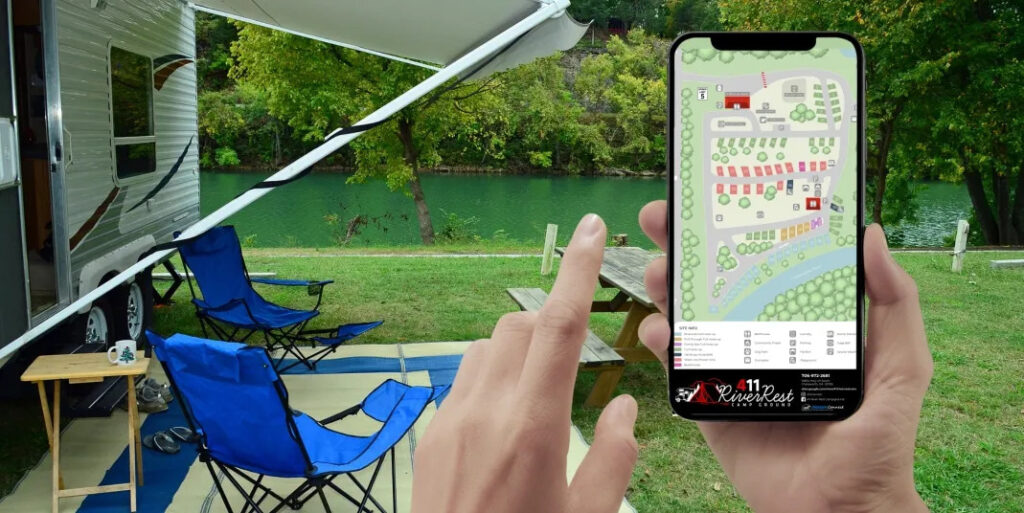
Spring is the most important reset point of the year for campgrounds, RV parks, and outdoor hospitality properties. Reservations increase quickly, new guests arrive daily, and expectations are high often before seasonal teams are fully staffed.
Across the United States, public land agencies and outdoor recreation authorities consistently stress the importance of seasonal readiness. Safe infrastructure, clear wayfinding, and accessible information reduce incidents, minimize confusion, and help properties operate smoothly during peak visitation. When spring preparation is rushed or incomplete, small gaps quickly turn into guest frustration and staff overload.
This guide outlines how campground operators can prepare for spring season the right way combining physical maintenance with clear, modern guest communication that supports both visitors and on-site teams.
Understanding the Importance of Pre-Season Campground Maintenance
Why Spring Season Preparation Matters for Campgrounds
Federal recreation agencies recommend completing inspections and repairs before visitor volume spikes. The National Park Service emphasizes seasonal readiness checks to reduce injuries, infrastructure failures, and emergency closures during high-traffic months.
For campgrounds, spring preparation matters because:
- Winter damage increases slip, trip, and vehicle risks
- Staff capacity is limited early in the season
- Unclear information leads to complaints instead of questions
Well-maintained grounds and clear communication work together to create a calmer, safer opening.
Common Issues Campgrounds Face After Winter
After winter, many campgrounds experience:
- Eroded gravel roads and uneven walking paths
- Faded, missing, or outdated signage
- Frozen or leaking water lines
- Electrical pedestals affected by moisture
- Printed maps and rules that no longer reflect current layouts
The U.S. Forest Service notes that unresolved seasonal damage can increase liability and reduce visitor satisfaction once peak season begins.
Essential Areas to Inspect and Repair Before Spring
Campsite Infrastructure: Roads, Paths, and Signage
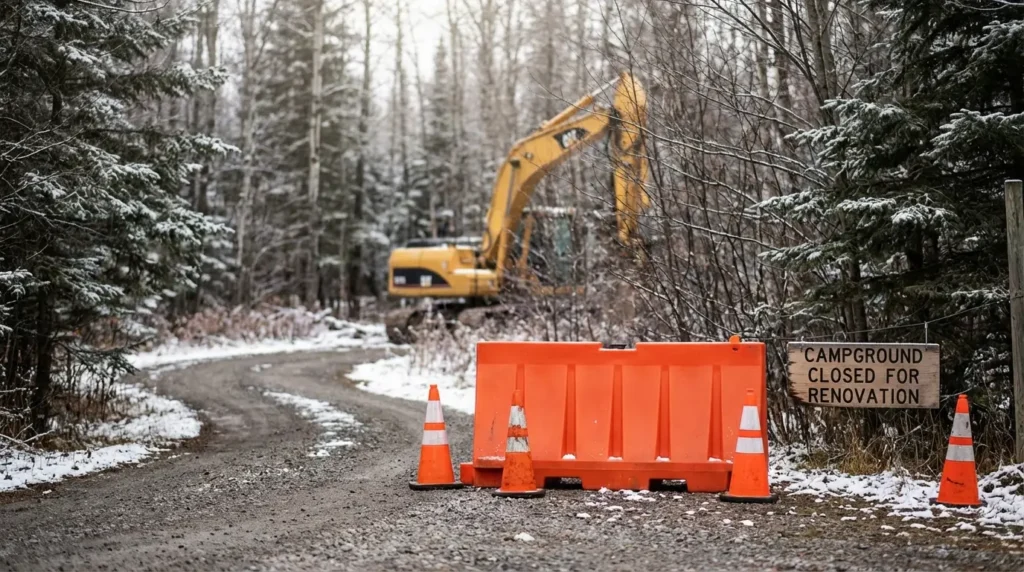
Roads, paths, and wayfinding should be inspected first. The Federal Highway Administration highlights that clear, visible signage and maintained access routes reduce congestion and improve safety in shared-use environments.
Directional signs should be placed where decisions are made at entrances, intersections, and amenity areas. Many campgrounds now pair physical signs with scannable access points so guests can instantly view maps and rules on their phone.
Amenities Upkeep: Electricity, Water, and Showers
Amenities play a major role in guest satisfaction. Before opening:
- Test all electrical hookups
- Flush and inspect water systems
- Deep clean restrooms and showers following Centers for Disease Control and Prevention sanitation guidance
- Verify lighting and emergency access routes
Clear communication about which amenities are open, seasonal, or limited helps manage expectations and reduces friction.
The Beginner’s Guide to Getting Your Campground Ready for Spring Season
What You’ll Need to Get Started: Tools, Resources, and Digital Guide Solutions
Successful spring preparation blends physical readiness with communication clarity.
Physical resources
- Inspection and safety checklists
- Maintenance and sanitation equipment
- Updated printed materials
Communication resources
- Printed property maps
- A centralized, web-based Guest Hub
- Scannable and tap-based access points placed across the property
Together, these resources reduce repetitive questions and support staff efficiency during busy weekends.
Step-by-Step Guide to Campground Spring Preparation
Step 1: Assessing Grounds and Facilities for Winter Damage
Begin with a full property walkthrough. Document hazards, schedule repairs, and confirm that site numbers, amenity locations, and emergency routes are accurate.
Public agencies such as the National Park Service recommend completing these assessments before reservation volume increases to avoid mid-season disruptions.
Step 2: Cleaning and Sanitizing Campsites and Cabins
Spring cleaning is about safety as much as appearance. Remove debris, sanitize high-touch surfaces, and prepare cabins and common areas for occupancy.
Sharing cleaning standards, quiet hours, and facility details through a centralized Guest Hub helps guests feel informed without requiring long check-in explanations.
Step 3: Upgrading Technology with iConnectTags, iConnectMaps, and iConnectTaps
Many modern campgrounds are combining familiar printed materials with simple digital access, without requiring guests to download an app.
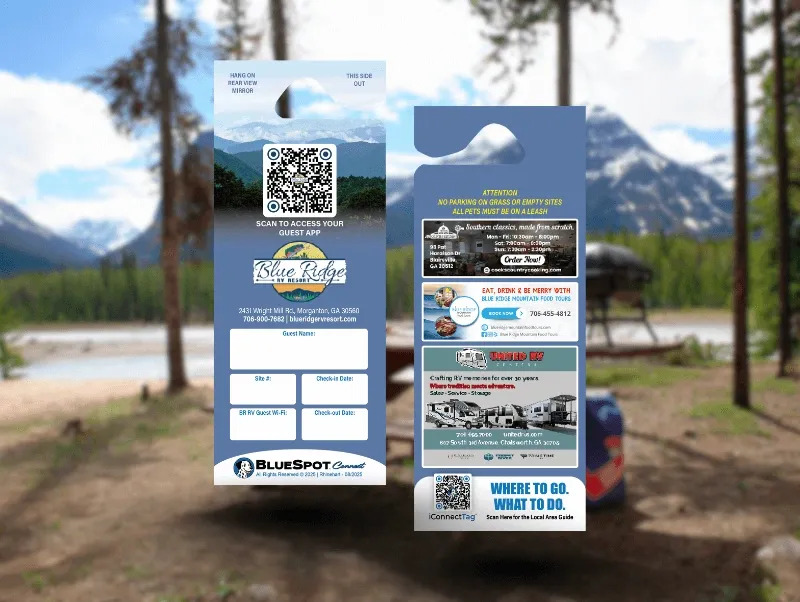
iConnectTags are smart rearview mirror vehicle tags provided to guests at check-in. Each tag includes QR codes that guests scan with their phone camera to access the campground’s no-download Guest Hub and Digital Area Guide.
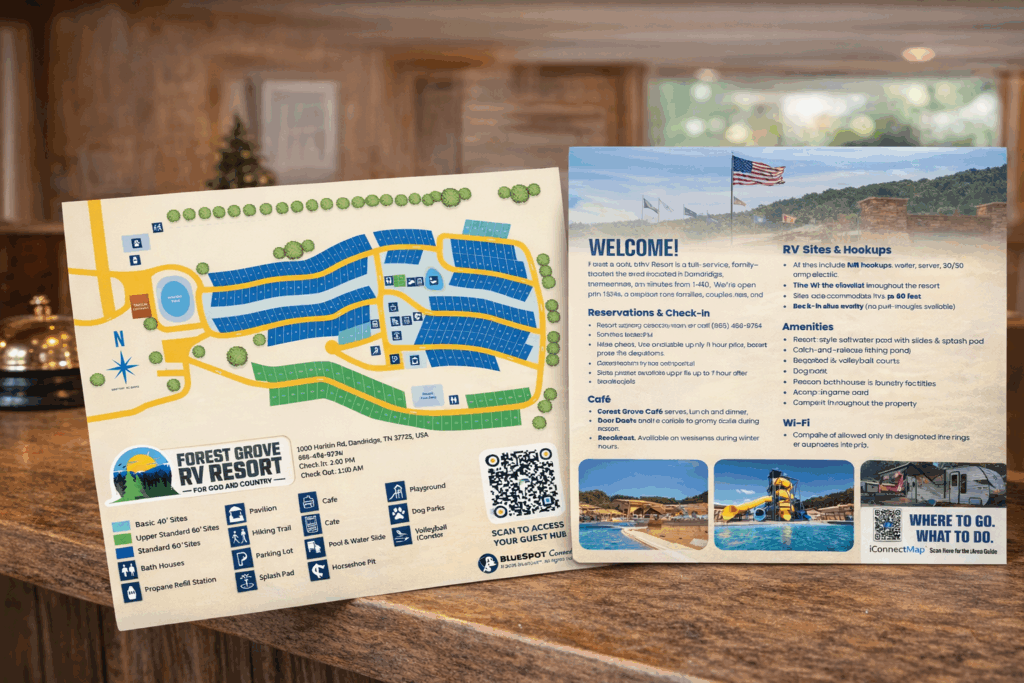
iConnectMaps are printed campground maps handed out at check-in. These maps include QR codes that link to the same Guest Hub, giving guests access to live information while still providing a physical map of the property, key locations, and important details.
iConnectTaps are NFC-enabled tap points placed at locations such as front desks, kiosks, welcome boards, or outside the office for after-hours arrivals. Guests simply tap their phone to open the same Guest Hub experience.

Approved explanation:
BlueSpot Connect uses scannable iConnectTags and tap-enabled iConnectTaps to give guests instant access to a no-download Guest Hub and Digital Area Guide. Whether guests scan or tap, they’re taken to the same centralized experience.
Together, these tools improve access to information, keep communication consistent, and help reduce repetitive guest questions supporting both guests and campground staff.
Step 4: Ensuring Compliance with Permits and Safety Standards
Spring is also the right time to review permits, accessibility requirements, and emergency information. The U.S. Access Board provides guidance on accessible routes and signage in public-facing environments.
Digital Guest Hubs make it easier to keep rules, emergency details, and accessibility information current without reprinting materials whenever conditions change.
Frequently Asked Questions
Most campgrounds offer utilities, restrooms, and showers, though some amenities may open gradually depending on weather and staffing. Clear communication helps manage expectations.
They give guests instant, self-service access to maps, rules, and local information, reducing confusion and wait times at the front desk.
Many public campgrounds use centralized reservation systems, but on-site information can still be limited. Digital Guest Hubs help bridge that gap at the property level.
Public campgrounds often follow fixed timelines and budgets, while private campgrounds can adapt more quickly by updating printed maps and guest communication tools.
Conclusion
Spring preparation sets the tone for the entire camping season. Campgrounds that invest in both physical maintenance and clear communication open safer, calmer, and more organized.
By pairing well-maintained facilities with easy access to maps, rules, and local information, properties reduce staff strain and help guests feel confident from arrival to departure.
Ready to simplify your spring opening and improve guest clarity?
Explore how BlueSpot Connect supports campgrounds with iConnectTags, iConnectMaps, iConnectTaps, and a no-download Guest Hub helping guests get answers instantly while supporting staff efficiency. Visit BlueSpot Connect to contact and get started.